
Mr Michael Robinson
Consultant Vascular Surgeon
As a consultant, I see the same scenario repeatedly…
A patient sits in front of me trying to reconstruct their own medical history. What did the scan show? What did the other consultant say? When did the pain start worsening? What medication are they actually taking now?
They’re not disengaged. They’re doing their best.
But we’ve built a system where the person at the centre of care has the least visibility of it. We’ve normalised the idea that records sit inside institutions. Inside hospital systems. Inside private provider silos.
But the reality is straightforward. The record belongs to the patient. And yet, access is still delayed, fragmented, or filtered through letters that arrive weeks later.
What’s interesting is how quickly this changes when you flip the model.
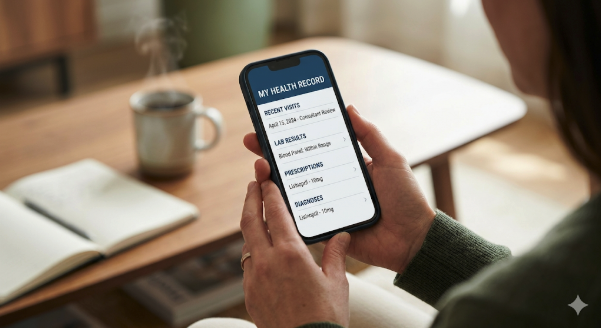
When patients have access to a live, structured record—when they can see their consultations, their results, their progress—it changes the dynamic completely. They become engaged. They understand trends. They ask better questions.
With platforms like Granite, that becomes practical rather than theoretical. The record isn’t locked away—it’s visible, structured, and shareable. And when you layer something like Walk-A-Cise on top, you start to see something even more powerful: not just static records, but continuous data. Walking distance, symptom progression, functional performance—captured in real time.
At that point, the record stops being a document. It becomes a living representation of the patient.
And once patients can see and carry that, everything improves—communication, decision-making, and ultimately outcomes.
Because if we’re serious about patient-centred care, it starts with ownership.
